




Your Body's Response
The mnsX monitor measures your body's response to effort in real-time and turns it into clear, usable data.
No AI. No statistics.
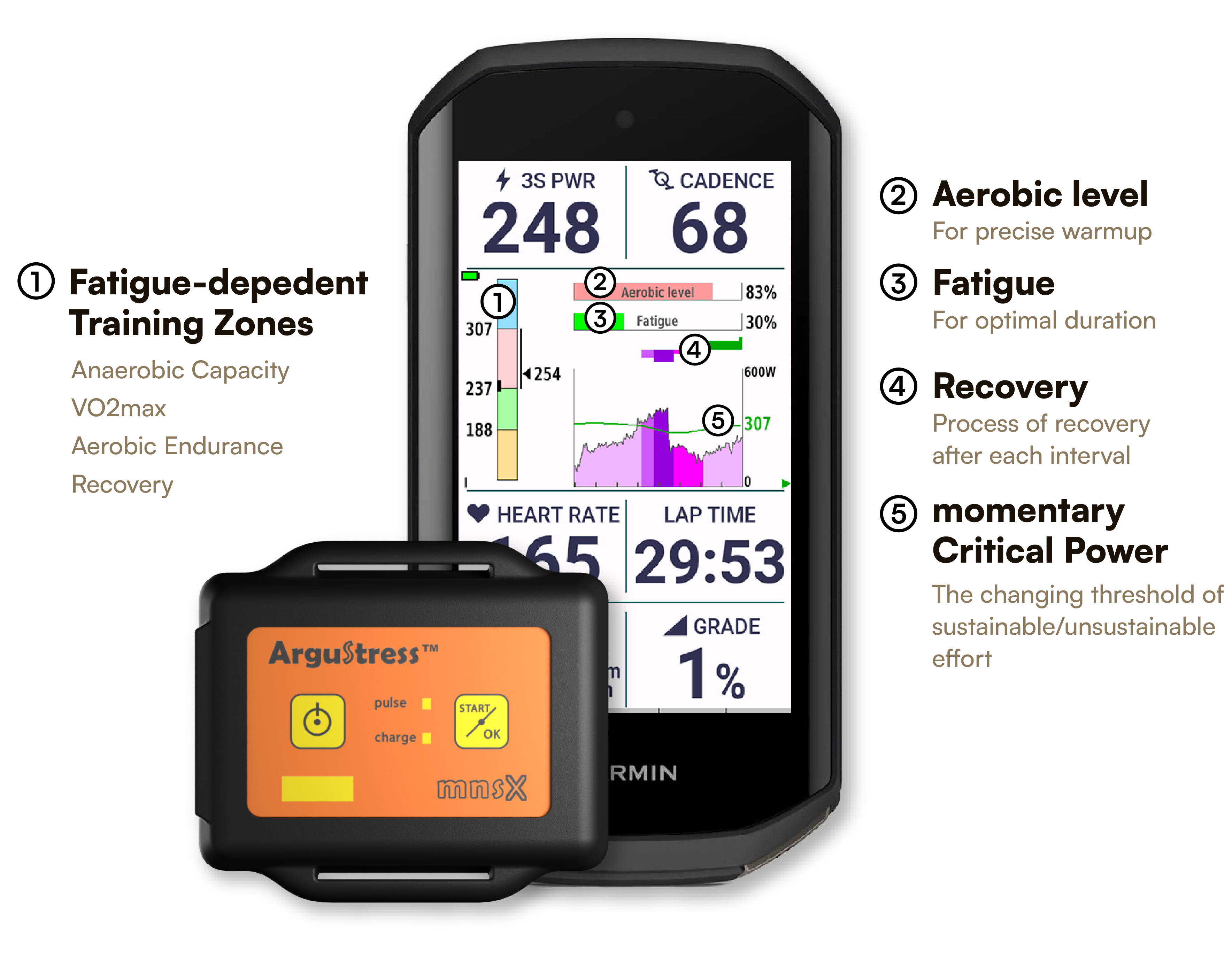
Essential data in real-time
mnsX gives you real-time data that shows what's happening inside your body — during every workout, every race.
Training zones that adapt to your fatigue - keeping you in the right ability-improvement zone for the whole interval.
Fatigue & Recovery, tracked live - know how much you have left, and when you're ready for the next big effort.
momentary Critical Power - shows your continuously changing threshold between sustainable and unsustainable effort.
Aerobic level - warm up precisely, every time.
Fatigue-dependent Training Zones
A static number (FTP, CP) can't define accurately the continuously changing training zones.
But your body's momentary status can.
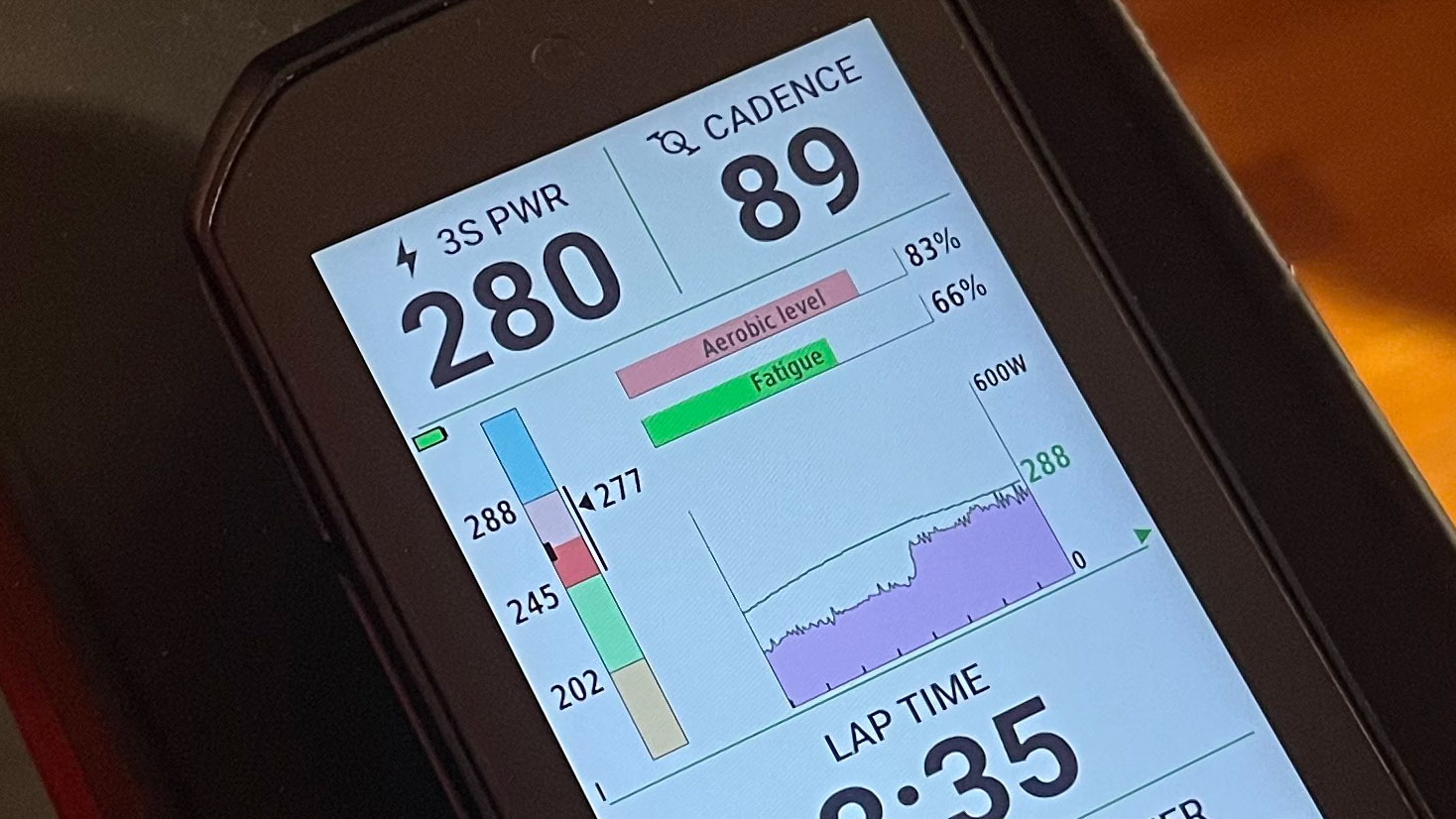
Adaptive zones
As fatigue builds, your training zones shift with it.
mnsX measures your fatigue in real-time and shows your exact zone thresholds in watts — automatically adapting to your fatigue and recovery between intervals.
No more 'too easy at the start, too hard at the end' within an interval — the zone fits from the first second to the last.
One zone, multiple intensities
A single target watt can drift through multiple ability improvement zones as you fatigue — shortening your targeted improvement time and reducing training efficiency.
mnsX displays on your device the fatigue-dependent zones' thresholds, making it easy to stay in the right zone for the entire interval and maximize your targeted ability improvement.
No more static, inaccurate zones.
Let your body decide the thresholds.
Momentary Critical Power
the momentary threshold between sustainable and unsustainable effort.
It carries information about your fatigue, recovery, and performance reserve, giving you a complete real-time picture of your body's momentary state.
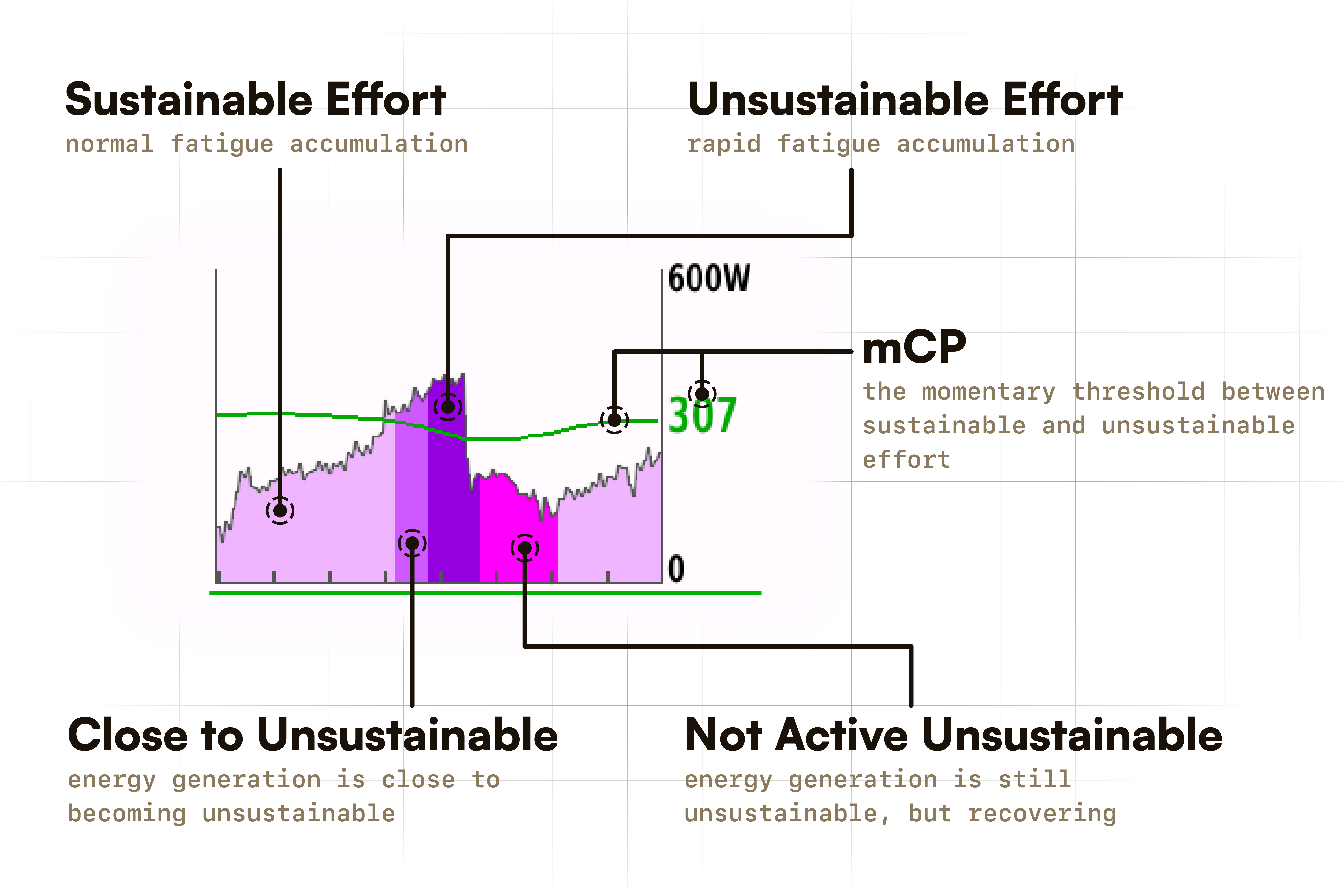
The critical threshold
momentary Critical Power (mCP) is the maximum power you can sustain without rapid fatigue — the continuously changing threshold between sustainable and unsustainable effort.
mCP changes during exercise, driven by your body's momentary status: fatigue, recovery, warmup level, nutrition, focus, altitude, and more.
Whether your effort is sustainable or not depends on your metabolic energy generation — and it takes time to turn from one state to the other.
mnsX measures your mCP in real-time and shows its current value on your device— along with the stage of your effort, from sustainable all the way to unsustainable, and back.
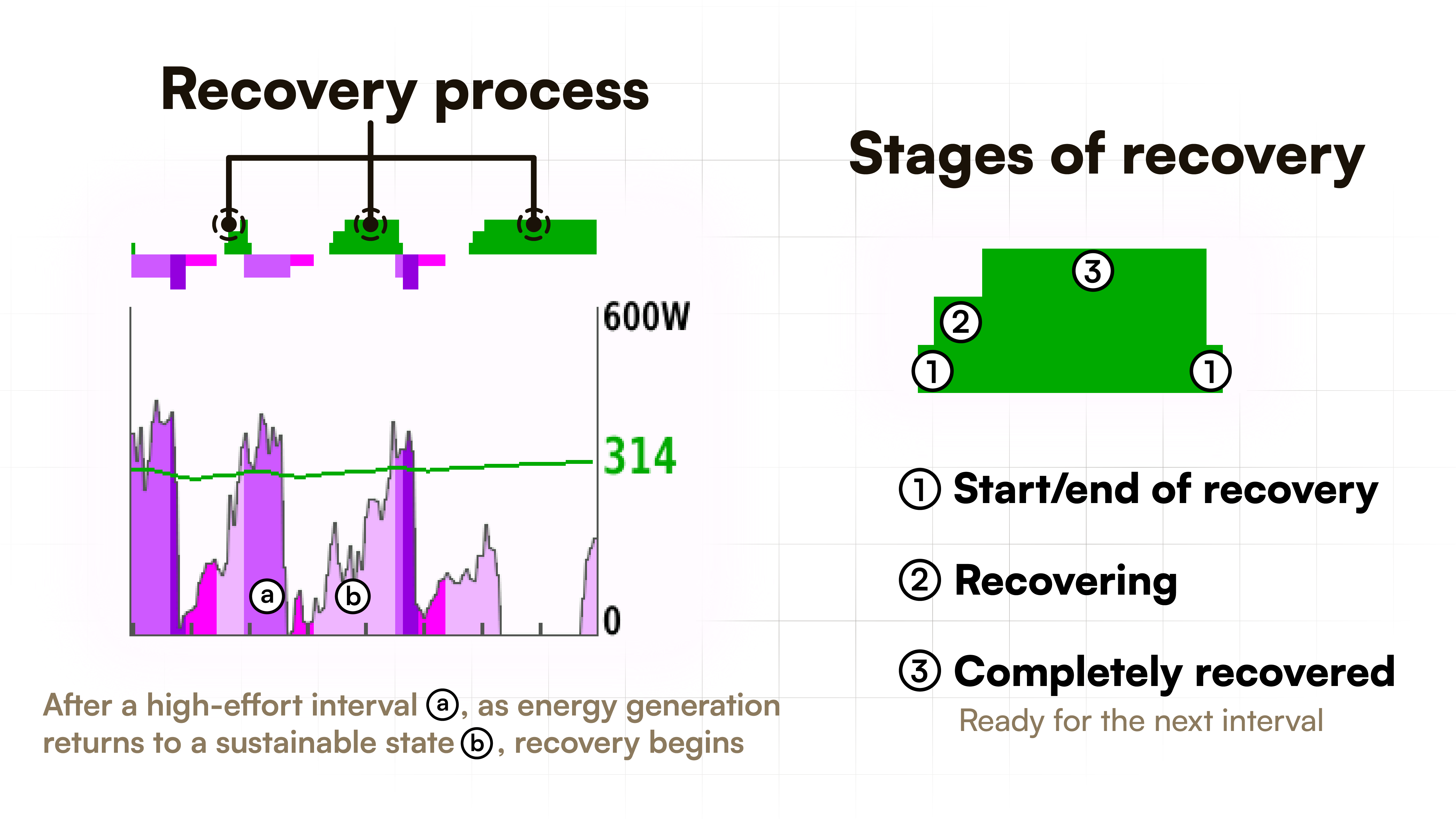
Recovery
Recovery is necessary after a high-intensity interval, especially if the effort was close to or was unsustainable. The body must recover back its pre-interval state to be able to perform at the same level in the next interval.
mnsX measures your recovery in real-time and displays the entire process — from the moment it starts, through the progress, to the point it's complete and you're ready for the next interval.
Recovery begins only after your effort drops below mCP and your energy generation turns back to sustainable — mnsX shows you both.
Fatigue
Follow your aerobic system's fatigue accumulation in real-time.
During an interval, the fatigue bar shows how close you are to full fatigue — helping to define the optimal interval duration.
During recovery, your aerobic system recovers and fatigue clears. The amount of clearance helps to define the number of intervals.
Perfect Warmup
every time
Not all rides are the same. Neither is your warmup.
Base of performance
Your aerobic system is the base of your performance. Different types of exercise require it to work at different levels.
It adapts to your effort automatically — but it needs time. If the aerobic level isn't close to the level the exercise requires, it spends the first part of the exercise catching up, which decreases the ability improvement efficiency.
That's why warming up to the right level in advance is essential.
What is the optimal aerobic level for a VO2max session or a Zwift race?
There is no global answer — it's personal.
Don't worry, mnsX got you!
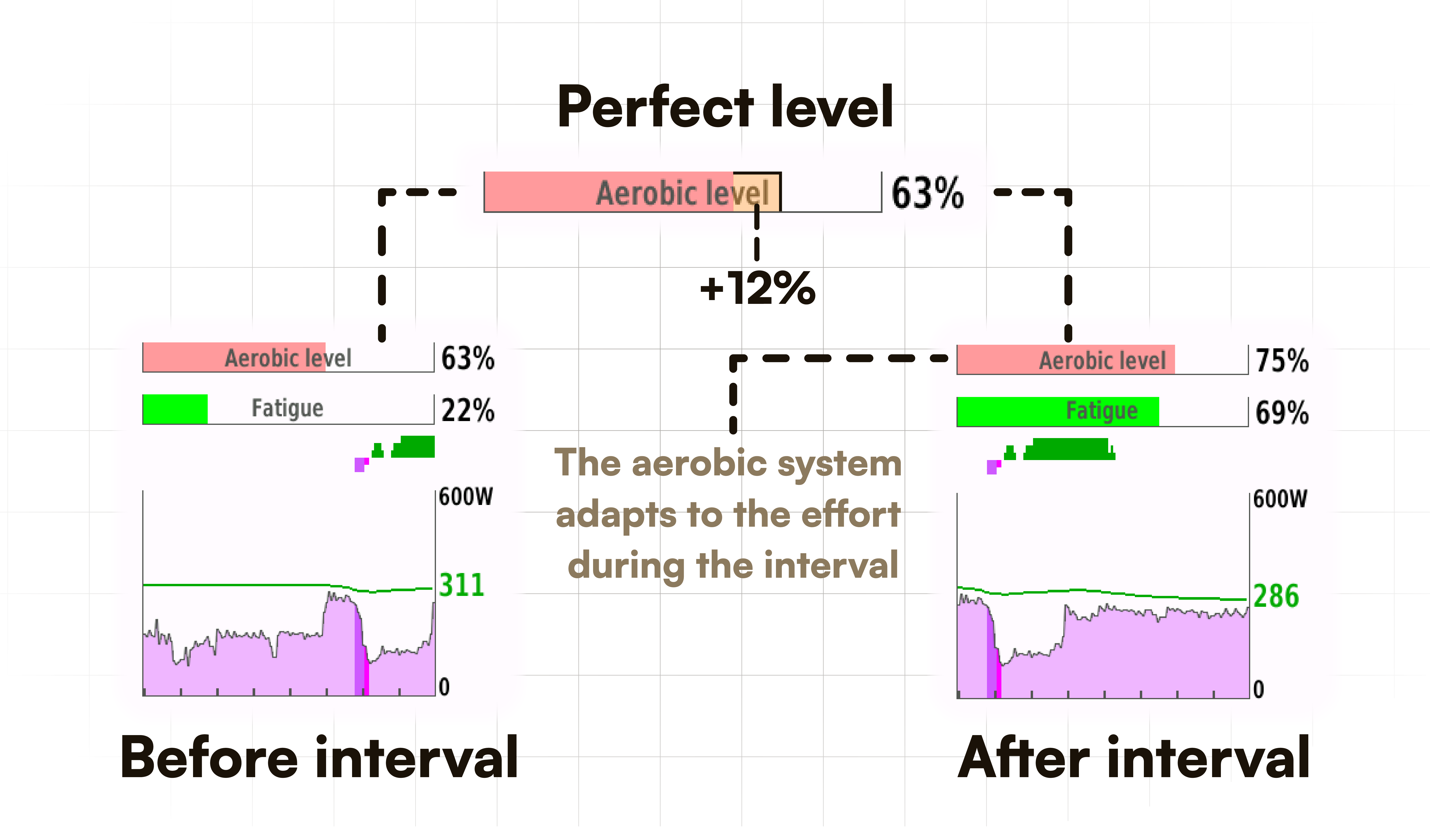
Perfect warmup level
mnsX measures your aerobic level in real-time and displays it as a percentage on your device.
To define your perfect warmup level, you only need to work at the exercise's effort and wait for your aerobic system to automatically adapt and stabilize at a certain level.
Next time, you know exactly around which level you need to warm up to.
It cools down too
Your aerobic system is efficient — when effort increases, it adapts immediately. But if intensity drops, it takes time before it starts scaling back. The gap between warmup and main effort matters. So does the intensity during recovery.
Big jumps take longer
The bigger the change in intensity, the more time your aerobic system needs to adapt. Gradual progression gets you there faster.
Ultimate weapon
in racing
mCP, fatigue, and recovery — unique real-time advantages in racing.
Recover without losing ground
Drop just below mCP to start recovering at the highest sustainable pace, and follow the recovery process.
After a climb, an attack, a massive effort — recovery is necessary, but so is maintaining a high pace. Otherwise you get dropped, or lose the advantage you just fought for.
mCP is the key to the optimal effort where you can recover while working at a high pace. It marks the threshold between sustainable and unsustainable effort — which is also the threshold where recovery begins.
Performance reserve
Performance Reserve shows the gap between your current effort and mCP — how close you are to the unsustainable threshold at any moment.
In a race, that information is almost cheating. A powerful tool for pacing and energy management — so you always know exactly how much room you have before going unsustainable.